Can a simulation feel?
The argument only counts simulated people if there is something it is like to be them. That is not a graphics question. The working claim is that experience depends on organization, not on carbon. If that claim fails, copies that behave like us need not be observers.
The argument counts simulated people as observers only if there is something it is like to be them. That is a claim about consciousness, not about graphics. It is the hidden gate popular retellings skip.
Behaviour
Talks, flinches, reports pain, passes every test we know how to give.
Computation
Information transforming according to rules.
Function
The pattern of relations. Bostrom needs this to be enough.
Experience
There being something it is like. Empty on purpose.
Physics does not yet say what it is like to be a process. The argument cannot be sharper than this premise.
This walk asks only what consciousness does to the simulation argument. The canonical survey lives next door.
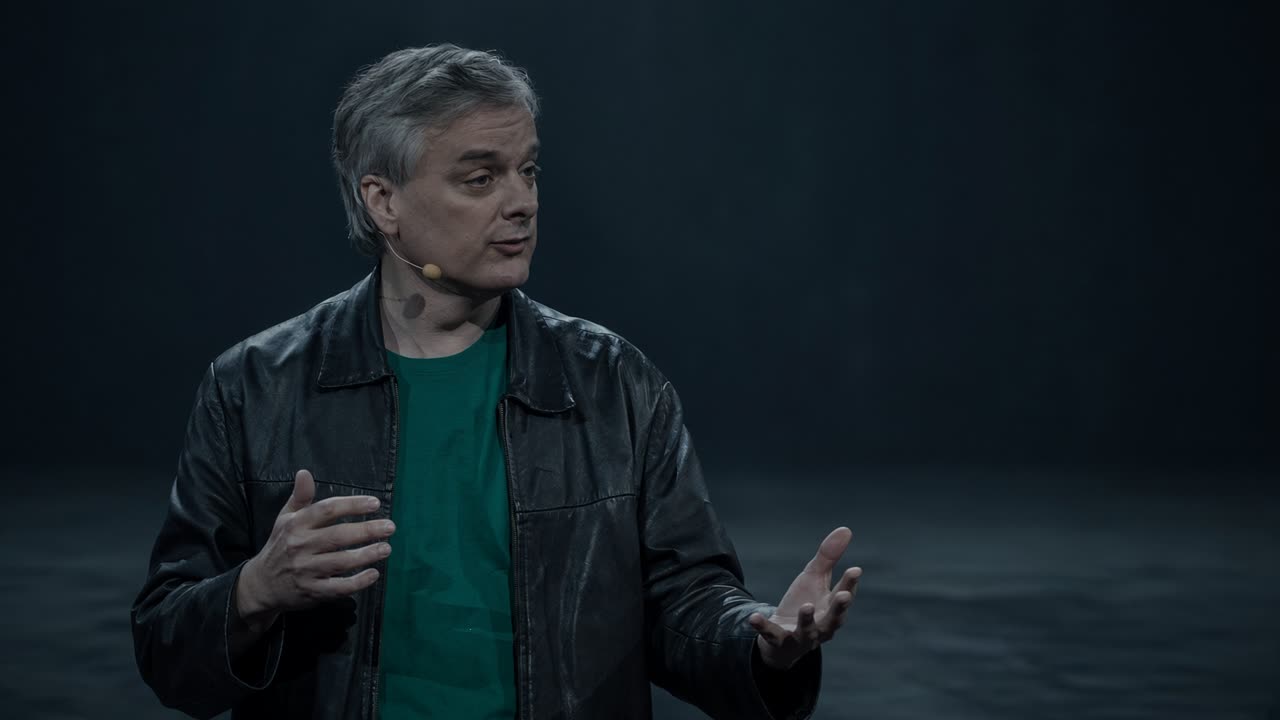
The hard problem, in his own voice. Behavior is not experience.
Why is all this behavior accompanied by subjective experience?
David ChalmersTED2014March 20146:10
Source notes
When it comes to the hard problem, that's the question of why is it that all this behavior is accompanied by subjective experience?
The hard problem named in public: behavior is not experience. Substrate-independence has to cross this gate, and this talk does not claim that it has.
Not a simulation argument. Not Reality+. Not a proof that a copy that behaves like us feels.
Official TED Talk, TED2014.
David J. Chalmers, “How Do You Explain Consciousness?,” TED2014, 2014.