The question across time
Official sittings, in order. Probability, then the outside, then avatar, then unscripted outcome, then interesting outcome, then surreal reality. Each date is architecture. Each plate keeps what kind of claim it is.
2014
TED2014
hard problem
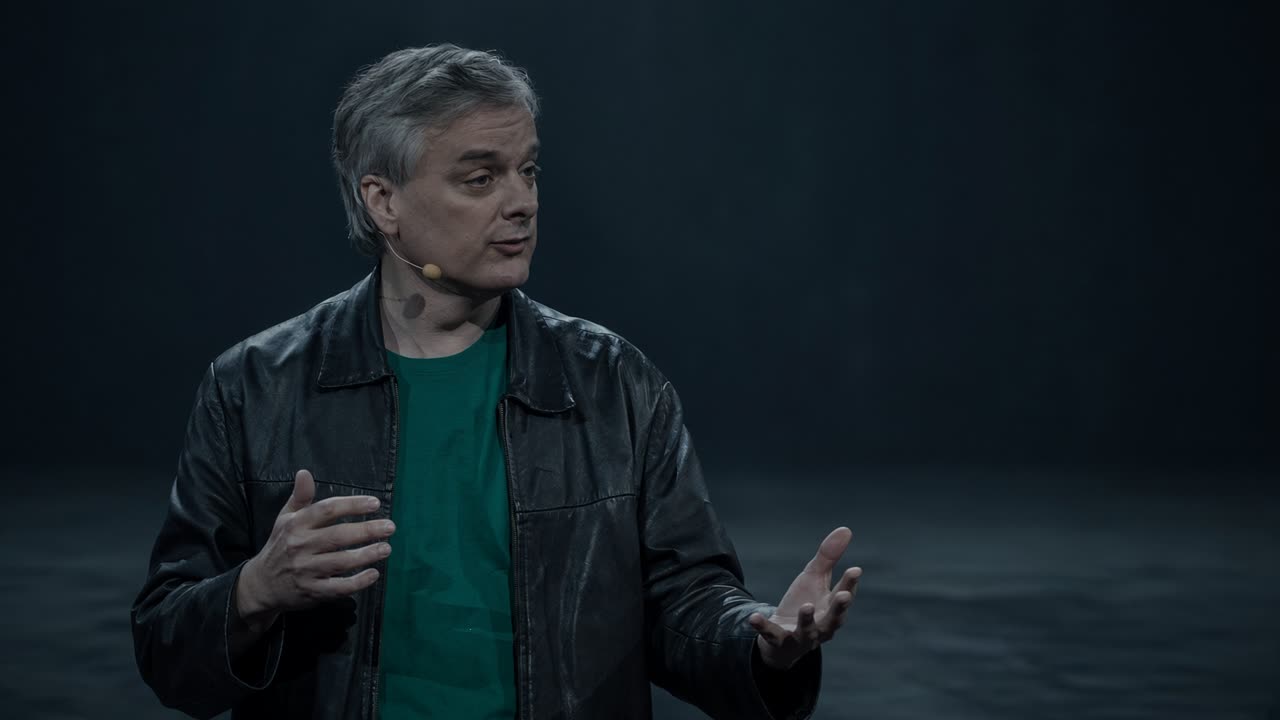
When it comes to the hard problem, that's the question of why is it that all this behavior is accompanied by subjective experience?
David ChalmersTED2014March 20146:10
Source notes
When it comes to the hard problem, that's the question of why is it that all this behavior is accompanied by subjective experience?
The hard problem named in public: behavior is not experience. Substrate-independence has to cross this gate, and this talk does not claim that it has.
Not a simulation argument. Not Reality+. Not a proof that a copy that behaves like us feels.
Official TED Talk, TED2014.
2014
SETI Institute colloquium
empirical test
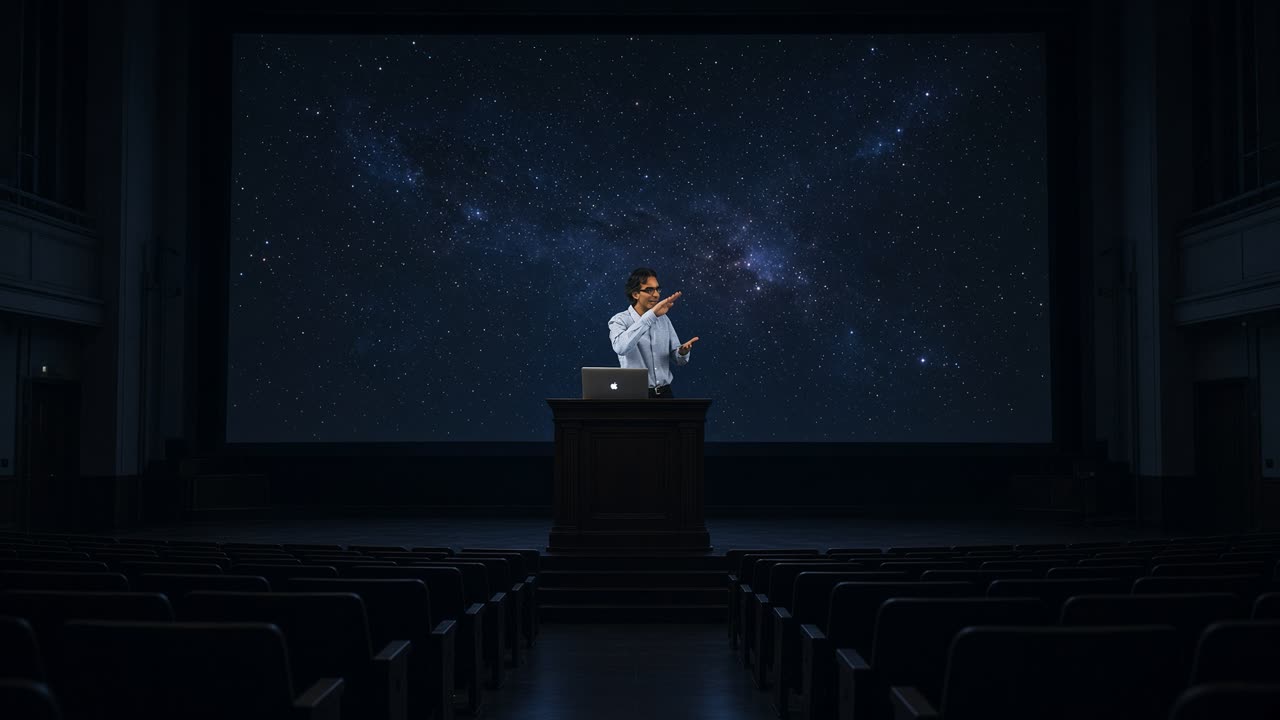
Assume an underlying grid. A maximum momentum is imposed by the grid. The highest-energy cosmic rays could show that preferred direction.
Silas BeaneSETI Institute colloquium23 September 201431:23
Source notes
Assume an underlying grid. A maximum momentum is imposed by the grid. The highest-energy cosmic rays could show that preferred direction.
A test of one implementation: a cubic lattice like the ones lattice QCD already uses. Official SETI colloquium on the 2014 paper.
Not a test of every simulation. Not a detection. A signature that would appear if this world were that kind of grid.
Official SETI Institute lecture. Start 31:23, the grid assumption.
2015
Closer To Truth
source argument
The simulation argument tries to show that one of three possibilities is true. It does not tell us which. Almost all civilizations go extinct before technological maturity, or almost none of the mature ones run ancestor-simulations, or we are almost certainly living in a computer simulation.
Nick BostromCloser To Truth31 July 20151:14
Source notes
The simulation argument tries to show that one of three possibilities is true. It does not tell us which. Almost all civilizations go extinct before technological maturity, or almost none of the mature ones run ancestor-simulations, or we are almost certainly living in a computer simulation.
The 2003 trilemma in his own voice. An ancestor-simulation is a detailed run of people like historical predecessors, so detailed the simulated people would be conscious.
Not a proof that we are simulated. Not Musk’s games argument. Not a claim about which of the three is true.
Official Closer To Truth interview. Start 1:14, the three possibilities.
2016
Code Conference
probability argument
The games argument arrives. Pong to photorealism becomes a probability claim about base reality.
Forty years ago we had Pong: two rectangles and a dot. Now, photorealistic 3D simulations with millions of people. If you assume any rate of improvement at all, games become indistinguishable from reality. Then the odds that we are in base reality are one in billions.
Elon MuskCode Conference1 June 2016
Source notes
Forty years ago we had Pong: two rectangles and a dot. Now, photorealistic 3D simulations with millions of people. If you assume any rate of improvement at all, games become indistinguishable from reality. Then the odds that we are in base reality are one in billions.
An exponential-games argument. The Pong grammar is the premise. The conclusion is a probability claim about base reality, not a laboratory result.
Not Bostrom’s trilemma, though it lives in the same neighborhood. Not a proof. He asks, on stage, what is wrong with the argument.
Official clip, On with Kara Swisher / Recode successor channel.
2018
The Joe Rogan Experience #1169
probability argument
The games argument arrives. Pong to photorealism becomes a probability claim about base reality.
If you assume any rate of improvement at all, then games will be indistinguishable from reality, or civilization will end. One of those two things will occur. Therefore we are most likely in a simulation, because we exist.
Elon MuskThe Joe Rogan Experience #11696 September 20185:07
Source notes
If you assume any rate of improvement at all, then games will be indistinguishable from reality, or civilization will end. One of those two things will occur. Therefore we are most likely in a simulation, because we exist.
The 2016 games argument restated, with a fork: indistinguishable games, or civilizational end.
Not a new derivation. Not Bostrom’s trilemma.
Authorized JRE Clips channel, taken from the official episode.
2019
Lex Fridman Podcast
question
The question turns outward. Not odds. A boundary.
The question he would ask a superhuman intelligence: what’s outside the simulation?
Elon MuskLex Fridman Podcast6 May 2019
Source notes
The question he would ask a superhuman intelligence: what’s outside the simulation?
An epistemic boundary. The interesting move is the question, not an answer.
Not a description of a server room. Not a claim that he knows we are simulated.
Official Lex Fridman clip.
2019
E3 Coliseum
playful remark
A playful register. Whose avatar are you. A laugh at Starbase.
We could be somebody’s video game right now. Whose avatar are you?
Elon MuskE3 Coliseum13 June 2019
Source notes
We could be somebody’s video game right now. Whose avatar are you?
A public, playful version of the avatar question.
Not evidence. Not a probability argument.
News recording of the E3 Coliseum panel, NowThis Impact. Not a first-party games-show upload.
2020
Cool Worlds
probability argument
Because the possibility of ancestor-simulations is itself unproven, Bayesian model averaging keeps the probability that we are sims below one half.
David KippingCool Worlds4 September 202020:32
Source notes
Because the possibility of ancestor-simulations is itself unproven, Bayesian model averaging keeps the probability that we are sims below one half.
The paper the walk already cites, spoken on his own channel. A rival to the one-in-billions headline, not a measurement of the sky.
Not Musk’s 2016 games argument. Not a proof we are in base reality. The conclusion moves if the prior moves.
Official Cool Worlds upload, 4 September 2020. Start 20:32, the probability section. Paper: Universe 6, no. 8 (2020).
2021
Starbase tour, part 2
playful remark
A playful register. Whose avatar are you. A laugh at Starbase.
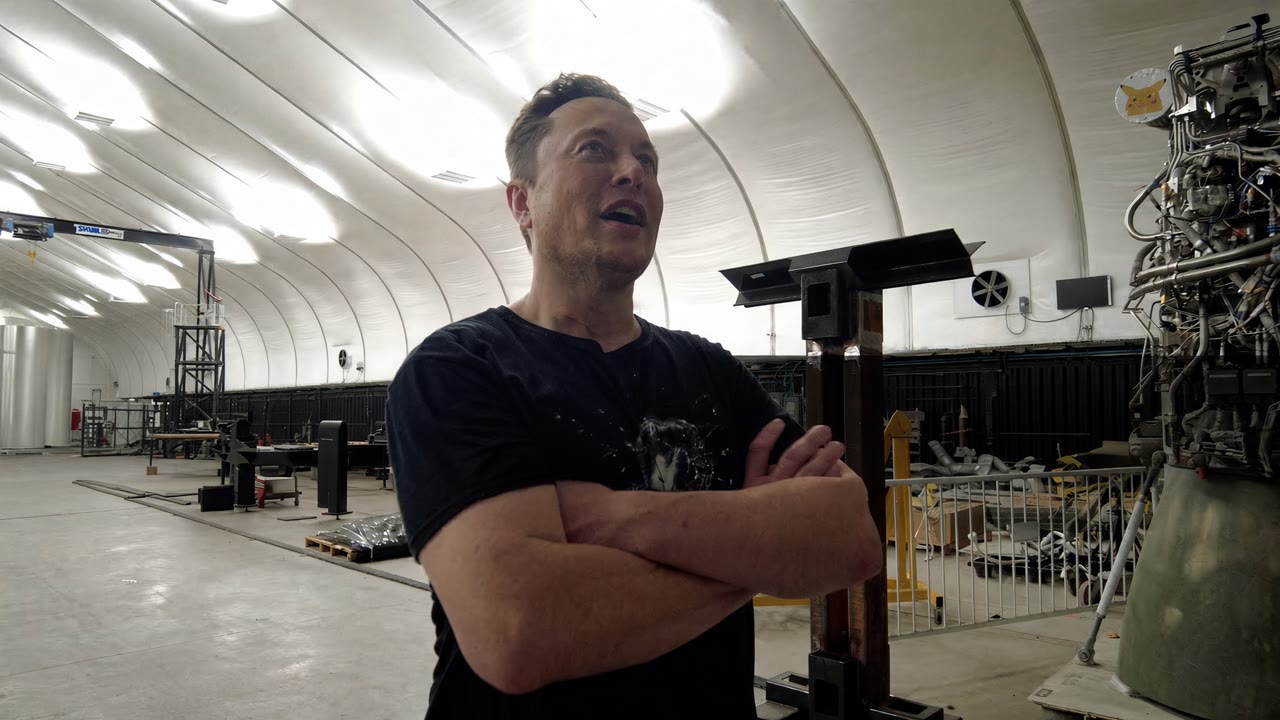
Am I an avatar in someone’s video game?
Elon MuskStarbase tour, part 2Summer 202151:04
Source notes
Am I an avatar in someone’s video game?
A laughing question during a conversation about recurring numbers. The laugh is part of the record.
Not a 42 proof. Not a simulation argument.
Official Everyday Astronaut upload. Existing plate 51:04.
2022
Closer To Truth Chats
virtual realism
Simulated is not a synonym for fake.
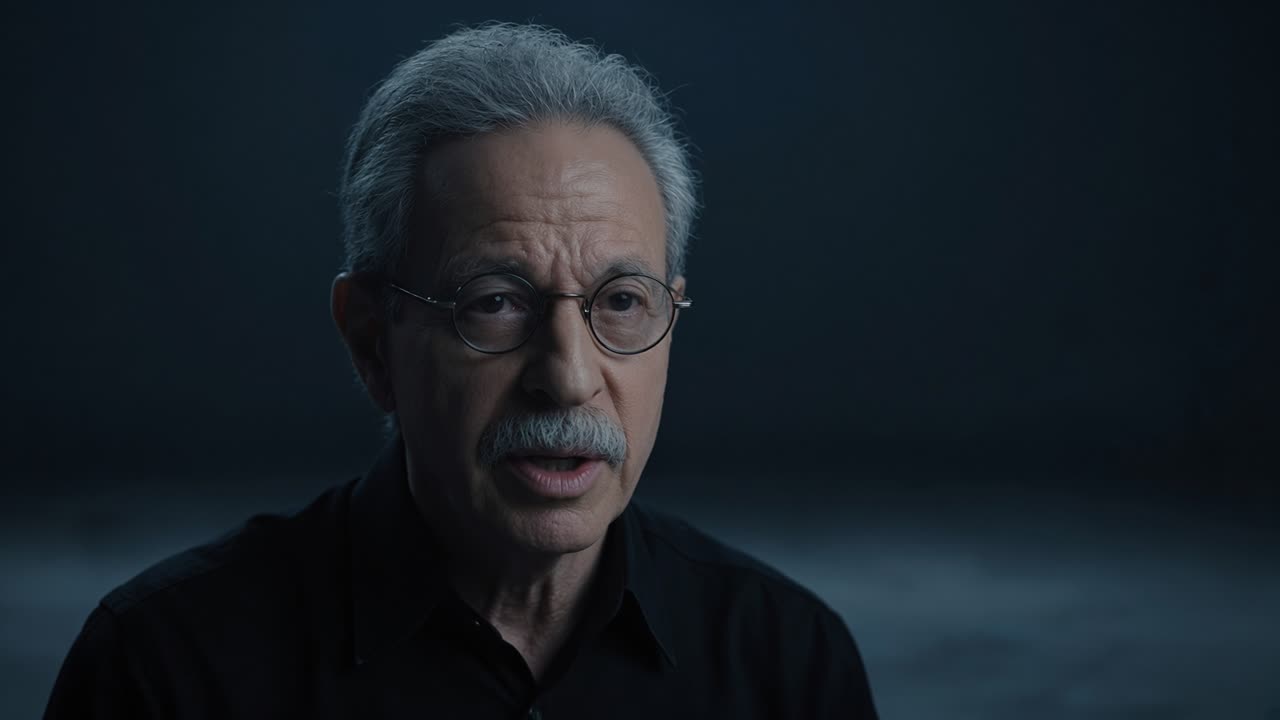
We might already be in a virtual world. Even if we are, virtual worlds can still be genuine reality: real objects, real events, meaningful lives.
David ChalmersCloser To Truth Chats24 March 2022
Source notes
We might already be in a virtual world. Even if we are, virtual worlds can still be genuine reality: real objects, real events, meaningful lives.
The central thesis of Reality+. Simulated is not a synonym for fake.
Not a proof that we are simulated.
Official Closer To Truth interview.
2023
Lex Fridman Podcast #400
engineering analogy
Simulation as an instrument for unknown outcomes, not a tape already edited.
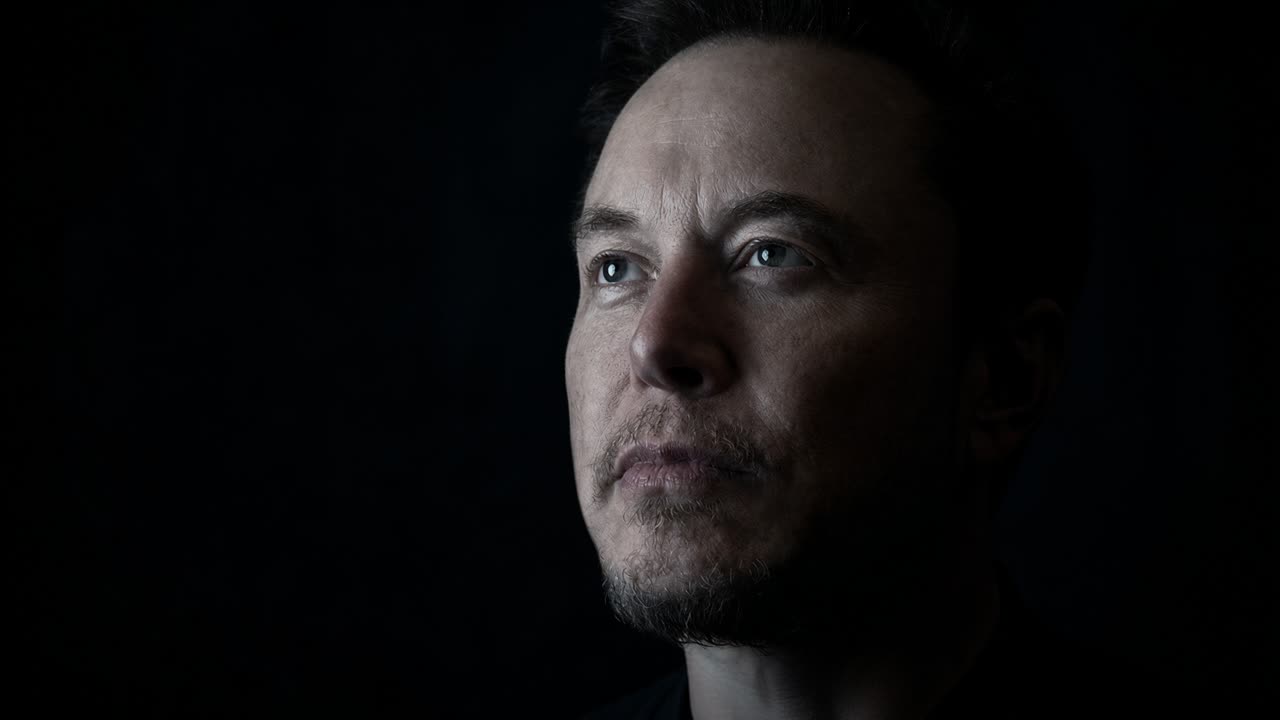
If higher beings run a simulation, they might do it to see what happens. SpaceX and Tesla run simulations because the outcome is not already known.
Elon MuskLex Fridman Podcast #4009 November 202353:58
Source notes
If higher beings run a simulation, they might do it to see what happens. SpaceX and Tesla run simulations because the outcome is not already known.
A shift. Simulation here is an instrument for unknown outcomes, not a movie already edited.
Not a demonstration that our world is simulated. Not a claim that the future is written.
Official Lex Fridman episode. Timestamp from the published transcript, about 53:58.
2025
The Joe Rogan Experience #2404
updated formulation
A later speculative branch: interesting outcomes survive because boring runs would be truncated.
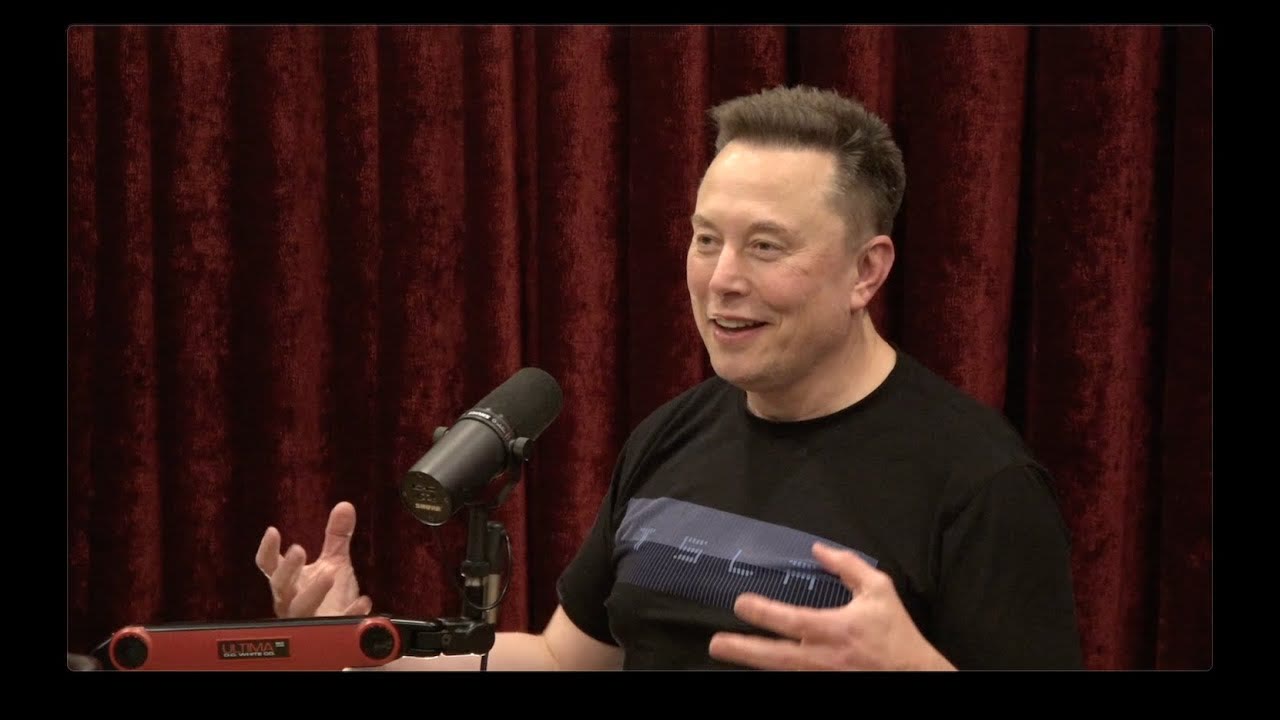
If simulation theory is true, the most interesting outcome is the most likely, because the simulators will stop any simulations that are boring.
Elon MuskThe Joe Rogan Experience #240431 October 2025194:33
Source notes
If simulation theory is true, the most interesting outcome is the most likely, because the simulators will stop any simulations that are boring.
The 2016 games argument restated, plus the Darwinian interesting-outcome line, in the same sitting. Official PowerfulJRE upload, about 3:14:33.
Not a new derivation. Not Bostrom’s trilemma. Not a scientific probability law.
Official PowerfulJRE upload, 31 October 2025. Start 3:14:33.
2025
People by WTF, episode 16
probability argument
The games argument arrives. Pong to photorealism becomes a probability claim about base reality.
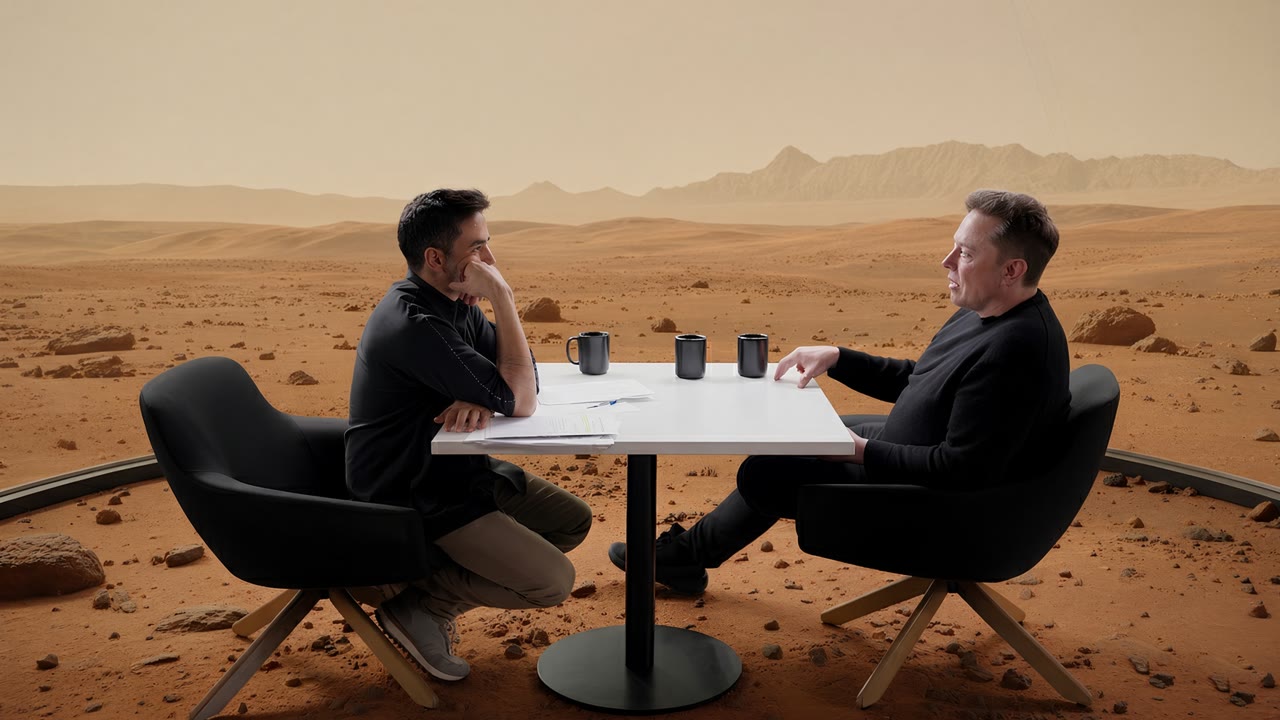
Think of these things as probabilities, not certainties. There is some probability that we are in a simulation. Pretty high.
Elon MuskPeople by WTF, episode 1630 November 202551:07
Source notes
Think of these things as probabilities, not certainties. There is some probability that we are in a simulation. Pretty high.
The 2016 games argument restated: Pong to photorealism, then NPC conversation, then the odds. Official Nikhil Kamath upload. Chapter at 51:07.
Not a new derivation. Not Bostrom’s trilemma. Not a laboratory result.
Official Nikhil Kamath / People by WTF upload, 30 November 2025. English original, not the later Hindi dub.
2026
Moonshots with Peter Diamandis, episode 220
updated formulation
A later speculative branch: interesting outcomes survive because boring runs would be truncated.

If simulation theory is true, only the most interesting simulations survive, because in this reality we truncate the ones that are boring.
Elon MuskMoonshots with Peter Diamandis, episode 2206 January 2026
Source notes
If simulation theory is true, only the most interesting simulations survive, because in this reality we truncate the ones that are boring.
A recurrence of the interesting-outcome speculation. Recorded 22 December 2025.
Not a scientific probability law. Not the 2016 games argument.
Official Peter H. Diamandis upload. Start time left unset until plate-level verification.
2026
Dwarkesh Patel, with John Collison
updated formulation
A later speculative branch: interesting outcomes survive because boring runs would be truncated.

If simulation theory is correct, the most interesting outcome may be more likely, because boring simulations would be terminated.
Elon MuskDwarkesh Patel, with John Collison5 February 202657:27
Source notes
If simulation theory is correct, the most interesting outcome may be more likely, because boring simulations would be terminated.
Selection for interestingness, offered as theory, with an engineering analogy. Section about 57:27.
Not a scientific probability law. Not the 2016 games argument.
Official Dwarkesh Patel upload, 5 February 2026.
2026
The Economist, The Insider
lived observation
Lived observation. The world as it is makes the thought harder to dismiss.
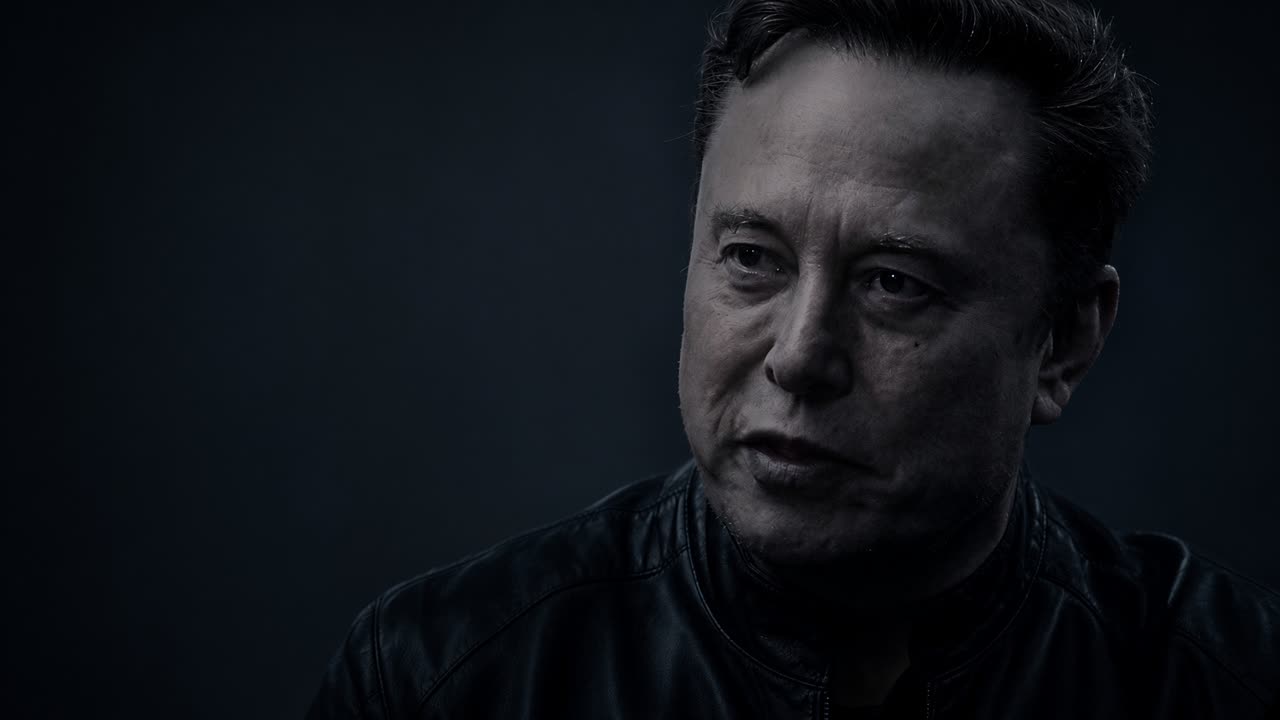
I think the world makes me believe in simulation theory. The things I’m doing are so preposterous that it’s hard to believe they’re real.
Elon MuskThe Economist, The Insider29 July 202648:18
Source notes
I think the world makes me believe in simulation theory. The things I’m doing are so preposterous that it’s hard to believe they’re real.
A lived-surreal observation, not a new derivation. He points at the gap between what used to be science fiction and what is actually being built, then treats that gap as a clue about reality. Official full interview, about 48:18.
Not the 2016 probability argument restated. Not a laboratory result. Not a claim that Starship proves a simulator.
Official The Economist upload, 29 July 2026. Start 48:18 from available transcript timing of the official full interview.