Bostrom’s actual argument
A fork, not a proof. An ancestor-simulation is a run of minds like a history’s people, not a movie of the cosmos.
Either almost nobody gets that far, or almost nobody who could would run us, or we are probably already such a run.
Bostrom did not prove we live in a simulation. He argued that if certain premises hold, at least one of three propositions must be true. The famous third line is only what remains after the other two are refused.
What this argument needs, first
Open one. If any fails, a later step stops. The three lines below only bind if these hold.
Almost every civilization like ours ends before it can run vast simulations of its ancestors.
fp ≈ 0
Even the civilizations that could run ancestor simulations almost never do.
fI ≈ 0
If the first two are false, then almost everyone with experiences like ours is simulated. We should then expect to be among them.
fsim ≈ 1
Not automatic. What remains if the first two fail.
You can keep more than one branch open. You cannot reject all three at once if you accept the premises.
Bostrom 2003
A technologically mature “posthuman” civilization would have enormous computing power. This could be used to run ancestor-simulations.
Nick Bostrom, “Are You Living in a Computer Simulation?,” The Philosophical Quarterly 53, no. 211 (2003): 243–55.
Brian Weatherson’s 2003 reply questioned the indifference step that treats you as a random observer. Bostrom answered in 2005. The dispute is about how to count observers, not about a laboratory result.
Brian Weatherson, “Are You a Sim?,” The Philosophical Quarterly 53, no. 212 (2003): 425–31.
Nick Bostrom, “The Simulation Argument: Reply to Weatherson,” The Philosophical Quarterly 55, no. 218 (2005): 90–97.
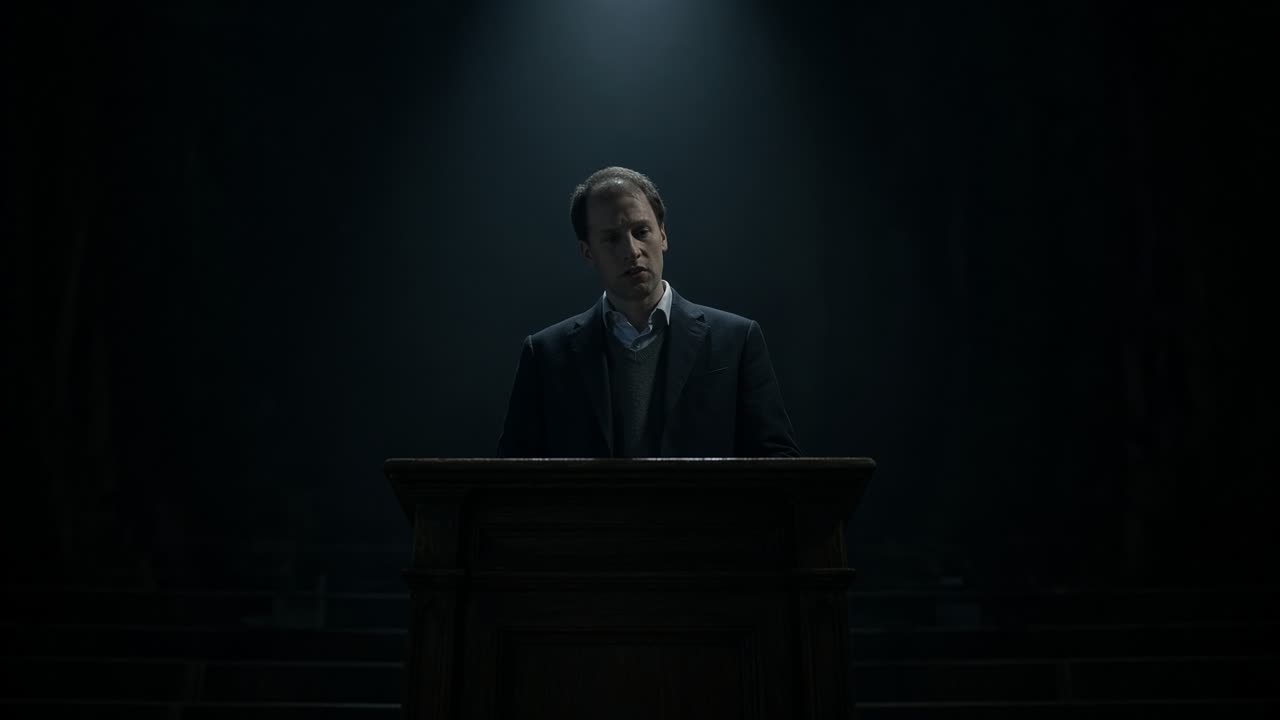
Hear him say the three lines. The paper does not pick which one is true.
At least one of three possibilities is true. It does not tell us which.
Nick BostromCloser To Truth31 July 20151:14
Source notes
The simulation argument tries to show that one of three possibilities is true. It does not tell us which. Almost all civilizations go extinct before technological maturity, or almost none of the mature ones run ancestor-simulations, or we are almost certainly living in a computer simulation.
The 2003 trilemma in his own voice. An ancestor-simulation is a detailed run of people like historical predecessors, so detailed the simulated people would be conscious.
Not a proof that we are simulated. Not Musk’s games argument. Not a claim about which of the three is true.
Official Closer To Truth interview. Start 1:14, the three possibilities.
What counts against it
A conclusion is only as strong as the counters it can survive. These are live rivals, not decorations. Each one stops a specific slide.
philosophical premise
Bostrom 2003
A fork, not a proof. At least one of three propositions, if the premises hold.
You may hold the first branch or the second without contradiction. The famous third line is only what remains if you refuse the other two.
Nick Bostrom, “Are You Living in a Computer Simulation?,” The Philosophical Quarterly 53, no. 211 (2003): 243–55.
philosophical premise
Observer indifference
The counting step treats you as a random draw from observers with experiences like yours.
Brian Weatherson’s 2003 reply: that sampling rule is not forced. Change how observers are counted and the concentration need not follow. Bostrom answered in 2005. The debate is anthropic method, not a laboratory result.
Brian Weatherson, “Are You a Sim?,” The Philosophical Quarterly 53, no. 212 (2003): 425–31.
inference
The number is counting-invariant
If simulated observers vastly outnumber base observers, you should expect to be simulated.
Self-sampling and self-indication do not return the same concentration. Which rule you pick moves the figure. That is a reason not to treat any single odds line as physics.
open question
Civilizations reach posthumanity
The first branch is often treated as the one to refuse, so that the third can dominate.
Robin Hanson’s Great Filter is a live reason to keep the first branch open: the silent sky is some evidence that almost none reach the power. Doom is not a flourish. It is a competing reading of the same absence.
Robin Hanson, “The Great Filter: Are We Almost Past It?,” 1998.
philosophical premise
Substrate-independence
A sufficiently organized computational process could feel. Carbon would not be required.
If experience requires a living brain, or something present computers cannot be, simulated replicas can behave like us and still not count. Behaviour is not experience. The counting argument then loses its population.
established physics
Planetary-mass compute
Bradbury’s 10⁴² ops/s is a design figure on known nanotech. Landauer prices a bit in joules.
Cheapness is not occupancy. Reversible computing can beat naive erasure. Cooling and willingness still have to be paid. A ceiling is not a census of ancestor minds.
inference
One in billions
If games keep improving until they are indistinguishable, and then are run in enormous number, base reality would be rare.
The rate is a weak hinge, not a clock. It is not Bostrom’s trilemma, not Kipping, and not a measurement of the sky. Extrapolation of Pong is not a posterior.
inference
Less than one half
Once possibility itself is unknown, Kipping’s average stays below one half in the setup he studies.
Still not a measurement. If we ever created a conscious ancestor-simulation, he says the evidence would flip. The model moves when the unknown moves.
David Kipping, “A Bayesian Approach to the Simulation Argument,” Universe 6, no. 8 (2020): 109.
established physics
A lattice scar in the sky
A cubic spacetime lattice can break rotational symmetry at ultra-high energy. Cosmic rays might remember the cube.
A test always tests a model of the simulation. If the imagined machine uses no cube, or reproduces Lorentz-invariant physics perfectly, internal observers have no such scar. Absence of anisotropy is not absence of a simulator.
Silas R. Beane, Zohreh Davoudi, and Martin J. Savage, “Constraints on the Universe as a Numerical Simulation,” European Physical Journal A 50, no. 148 (2014).
philosophical premise
A computational universe
Reality may be fundamentally computational. Cellular automata, lattices, the ruliad.
Wolfram’s own answer: no underlying computer. Computational is not computed by someone. Digital physics is not Bostrom’s ancestor-simulation.
Stephen Wolfram, “If the Universe Is Computational, What Computer Is It Running On?,” Wolfram Physics Project Q&A, 2020.
speculation
Nested simulators
If simulations can contain simulations, most observers might sit far from any base.
Regress does not identify a last machine, and it does not tell you which level you are on. The cheapest stack would not have to look like this physics unless it was built to. Depth is not a signature.
speculation
Recurring 42 as leak
A number may cause the question. ASCII 42, COMPUTER/HUMANITY 111, a Starbase laugh, a later 420.
Chance, selection, and after-the-fact counting are the first rivals. A pattern becomes evidence only if it predicted, discriminated, and could have failed. Cipher cannot open the consciousness gate.
philosophical premise
Still real
A virtual world can contain real objects, real people, and lives that matter.
That refuses “simulated means fake.” It does not prove we are simulated, and it does not settle what we would owe a world we made. Ontology can change while duty remains.
David J. Chalmers, Reality+: Virtual Worlds and the Problems of Philosophy (New York: W. W. Norton, 2022).
open question
They would run us
Some posthumans would run detailed ancestor-simulations.
Ethical refusal is a live way to keep the second branch open. If creating minds we control is a harm, then “almost never would” is not a flourish. It is a reason the third line need not dominate.
The fork is the argument. The next plates ask only whether a machine that large is even speakable in physics. Cheapness is not occupancy.
Bostrom’s physics is a budget, not a proof. The numbers have units. Change a factor, and the cheapness moves. The logic does not.
Take
10¹¹
humans
Order of all humans so far, as Bostrom takes it.
×
50
years each
A round life, not a census.
×
3×10⁷
seconds / year
π × 10⁷, close enough for a Fermi problem.
×
10¹⁴–10¹⁷
ops / s / brain
Retinal estimate at the low end; synapses and firing at the high end.
=
10³³–10³⁶
ops
A rough cost for the mental history of humankind, as the paper rounds it.
A planetary-mass computer could run the mental history of humankind with less than one millionth of its processing power for one second.
10¹⁴–10¹⁷
ops / s
One brain, as a computational budget.
Bostrom 2003, from retinal processing up to synaptic firing.
10³³–10³⁶
ops
All of that history, added up.
100 billion lives × 50 years × 30 million seconds × the brain budget.
10⁴²
ops / s
A computer with the mass of a large planet, on known nanotech designs.
Bostrom 2003, citing R. J. Bradbury, Matrioshka Brains (2002).
5×10⁵⁰
ops / s
One kilogram at the Lloyd limit: energy and mass used as computer.
Seth Lloyd, Ultimate physical limits to computation, Nature 406 (2000).
Sources · capacity lineage
Nick Bostrom, “Are You Living in a Computer Simulation?,” The Philosophical Quarterly 53, no. 211 (2003): 243–55.
Seth Lloyd, “Ultimate Physical Limits to Computation,” Nature 406 (2000): 1047–54.
The planetary computer
Bostrom did not invent 10⁴². Footnote 4 is R. J. Bradbury, Matrioshka Brains, 2002. The paper says planetary mass. The citation is a star. Mass is not power. Cooling is not free.
Mass
Disassembled planets, rebuilt as nested shells around a star.
What it is
R. J. Bradbury, Matrioshka Brains, 2002. This is Bostrom’s footnote 4. Nanocomputer satellites harvesting a star. Waste heat of one shell powers the next.
Power
A star. The Sun is 3.8×10²⁶ W. 10⁴² irreversible ops / s at 300 K is about 10⁻⁵ of that luminosity.
What it is not
Not a planetary-mass ball. Same integer, different machine. Bostrom collapsed the citation into planetary-mass. We uncollapse it.
- Power at 300 K
- 2.9×10²¹ W
- In Earth sunlight
- 1.7×10⁴×
- Of the Sun
- 7.6×10⁻⁶
Earth’s intercepted sunlight, ~1.7×10¹⁷ W
Solar luminosity 3.8×10²⁶ W
What it runs
Minds
Nervous systems, at neuronal or sub-neuronal grain. Virtual bodies only as far as they feed experience. Distant sky compressed. Unobserved microstructure omitted, filled in if someone looks.
One millionth, one second
10⁻⁶
One second of one millionth of a 10⁴² machine is 10³⁶ operations. That is the expensive end of one human mental history as the paper rounds it.
What it does not run
The cosmos
The whole universe at quantum grain. Bostrom says that is infeasible without new physics. Ancestor-simulation is not cosmos-simulation.
10⁴²
10⁴² is a lower bound on a design, assuming known nanotech. It is not a law of physics, and it is not occupancy. A machine that could run a history is not evidence that one is running us.
Sources · capacity lineage
Nick Bostrom, “Are You Living in a Computer Simulation?,” The Philosophical Quarterly 53, no. 211 (2003): 243–55.
Robert J. Bradbury, “Matrioshka Brains,” 2002.
K. Eric Drexler, Nanosystems: Molecular Machinery, Manufacturing, and Computation (New York: Wiley, 1992).
Anders Sandberg, “The Physics of Information Processing Superobjects: Daily Life Among the Jupiter Brains,” Journal of Evolution and Technology 5 (1999).
If you assume any rate of improvement at all, games become indistinguishable from reality.
Measured
1972 to 2026
The y-axis is operations per second of a box we already built. Not fidelity. Fidelity was never a volt.
1972
Pong
10⁵ ops / s
TTL and analog. Two rectangles and a dot. Order of magnitude, not a datasheet.
1993
Mapped rooms
10⁷ FLOPS
A 486-class PC running Doom. About 10⁷ floating-point ops / s.
2004
Collision
4×10¹⁰ FLOPS
GeForce 6800 Ultra class. About 4×10¹⁰ FLOPS.
2013
Cities
2×10¹² FLOPS
PlayStation 4, 1.84 TFLOPS. A box millions of people already owned.
2016
Named
9×10¹² FLOPS
GTX 1080, 8.9 TFLOPS. The year of the Code Conference claim.
2026
World models
10¹⁴ FLOPS
RTX 5090 class, ~10¹⁴ FP32 FLOPS. One consumer GPU sits at Bostrom’s retinal budget for one brain.
Right edge of the bar is 10¹⁴ ops / s. Bostrom’s retinal processing, the low end of one brain.
A 2026 consumer GPU sits at 10¹⁴ FLOPS. Bostrom’s low-end brain is 10¹⁴ ops / s. Same order. That is a unit coincidence, not a mind.
If the measured rate held, the remaining interval would be short. That is still an extrapolation, not a clock. There is no FLOPS of photorealism on this axis.
Assumed
1 / 10⁹
One in billions
Billions of indistinguishable runs, then you as a random observer among them. The number is a consequence of that assumption.
Changing the rate does not move this shore. The jump is not a measurement. The y-axis stops at boxes we built.
The jump from a graphics trajectory to one in billions is not a measurement. It assumes the indistinguishable runs are then numerous.
Elon Musk, Code Conference, 1 June 2016.
Peak theoretical FLOPS of a contemporary game or consumer box, Fermi-rounded. Pong is gate operations, not floating point. Sources: published NVIDIA and Sony peaks; Intel 486 class for 1993.
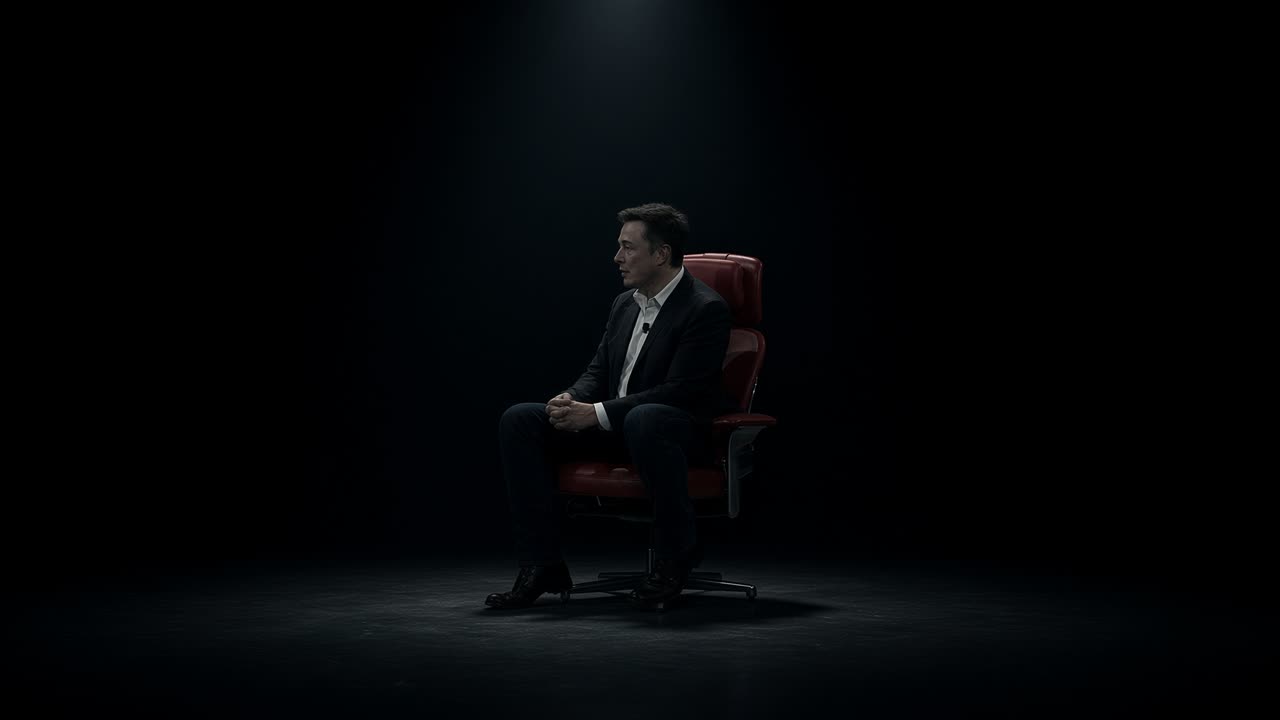
The rate is his argument. Hear the 2016 compression after the budget, so the two calculations stay distinct.
Forty years ago we had Pong: two rectangles and a dot.
Elon MuskCode Conference1 June 2016
Source notes
Forty years ago we had Pong: two rectangles and a dot. Now, photorealistic 3D simulations with millions of people. If you assume any rate of improvement at all, games become indistinguishable from reality. Then the odds that we are in base reality are one in billions.
An exponential-games argument. The Pong grammar is the premise. The conclusion is a probability claim about base reality, not a laboratory result.
Not Bostrom’s trilemma, though it lives in the same neighborhood. Not a proof. He asks, on stage, what is wrong with the argument.
Official clip, On with Kara Swisher / Recode successor channel.